The collapse of future society and the battle for truth
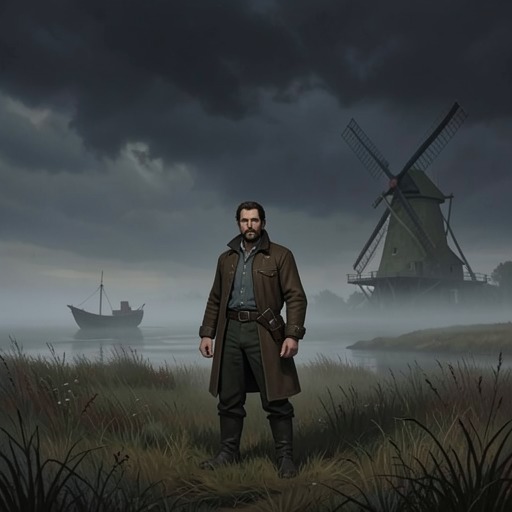
The HummingbirdThe collapse of future society and the battle for truth form a projected dystopian crisis in which the language of freedom is turned against evidence, shared obligations, and the conditions of common life. Miraijin, imagined first as an eighteen-year-old capable of gathering a following and then as a nineteen-year-old driven into hiding, becomes a public witness and organizer for a different future. The vision binds her coming-of-age to Marco Carrera’s defining effort to hold time still: he can protect and prepare her, but he cannot prevent the world around them from changing or collapsing.
The Future Crisis
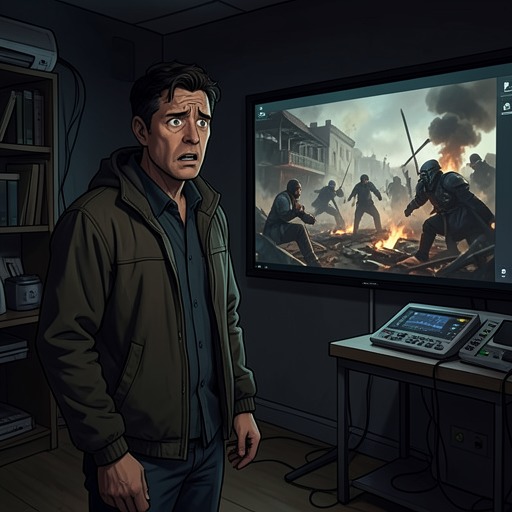
The future passage imagines a world endangered by trends that people had long pictured—in books, comics, cartoons, manga, films, art, and music—but that many nevertheless refuse to recognize until the danger is upon them. Others believe too late. The crisis is therefore not simply a sudden catastrophe: it is a failure to hear warnings and to accept what has become evident. By the time the threat is acknowledged, it has taken the shape of a war, fierce and explicit, between truth and freedom.
The conflict turns on a reversal in the meaning of freedom. Rather than a shared political value, freedom has become hostile and grindingly plural: a collection of permissions to reject authority, unwelcome laws, inherited agreements, institutions, and founding values. The imagined list ranges from refusing evidence and documented facts to producing and believing false news; from rejecting medical protocols, vaccines, or antibiotics to polluting the sea, groundwater, and seabed. It also includes permission to be cruel, racist, homophobic, anti-Semitic, Islamophobic, fascist, or selfish, and to oppose any effort to correct error in the name of preserving the freedom to err. The accumulating examples make the danger feel social and ordinary as well as political: the destructive license is exercised in daily choices and justified as individual will.
In this account, the crucial opposition is not between freedom and control in the abstract. It is between a freedom that treats every shared limit as an enemy and truth understood as a basis for living together. Evidence, culture, science, institutions, and the social pact are all exposed to the same attack. The passage describes a society in which pluralism has been disfigured into atomized preference, so that the defense of an error can claim the same authority as the defense of documented fact.
Miraijin and a New Generation
At eighteen, Miraijin is imagined as a young woman whose growing visibility gathers an expanding audience. Her celebrity brings money, but the future vision does not make fame itself the prize: her grandfather expects her to remain rooted in ordinary life and to use her resources rather than be captured by the machinery of celebrity. She is to continue school and education, play the guitar and piano, travel to London to study English, and share parties, concerts, and holidays. Her grandfather handles the practical demands of her growing stardom so that she is not turned into a company or brand, nor surrendered to agents, prosecutors, promoters, entrepreneurs, and exploiters.
The people who stay close are instead the young people who imitate her and resist the collapse their parents have caused. The hoped-for change begins when Miraijin and others like her are found, gathered, and brought together—not merely celebrated as isolated stars. The passage calls them the new men and women of the future, a new humanity capable of surviving the ruin made by the old one. Their first task is to save the world; changing it follows. The emphasis on assembling a generation gives Miraijin’s charisma a practical direction: it draws people together rather than converting her into a marketable personality.
Her following is imagined across generations, though unevenly: children and adolescents are numerous, young adults numerous, adults few, and older people very few. That imbalance sharpens the generational conflict. Young people who once listened to Miraijin grow up, detach themselves from their parents, and fight them if necessary; they learn to think collectively and give culture a central place in their lives. Her influence is therefore not only a matter of admiration. It becomes a means by which a younger public acquires shared commitments while the old world is dying.
The Struggle on the Net
Miraijin and her peers fight on the Net, the adverse field where the metastases of this corrupted freedom proliferate. While others fight in physical life, her task is to keep a space there alive for children and teenagers. Games, stories in their native language, and lists of do’s and don’ts are the proposed instruments: forms through which discernment and ordinary moral judgment can be taught and maintained amid the noise.
What she is asked to preserve is larger than factual accuracy alone. The passage names pity, a disappearing normality, and an old European goodness associated with emigrants and exiles who died far from home; servants, peasants, miners, laborers, and sailors who endured exhausting work for their children; missionaries, intellectuals, poets, artists, architects, engineers, and scientists persecuted by tyrants. The long catalogue places Miraijin’s online work in a historical and ethical inheritance. The Net is not made harmless, but it can become a place where the memory of solidarity and the habits of discernment remain available to the young.
The program called Remember Your Future gives this labor an organized form. It is no longer simply a phrase or a personal message: it becomes a doctrine, with precepts to follow, behavioral changes to adopt, and results to achieve, developed by people described as the finest minds fighting alongside Miraijin. Its name directs attention forward while making remembrance part of the work: the future to be defended is imagined through a recovered understanding of what human beings have made and what they might still preserve.
Fame, Flight, and Separation
At nineteen, Miraijin’s public witness makes her a target. She must leave her home, her life, and her city, move constantly, and live in secret places. She is threatened and defamed, but also admired and protected as a treasure, because her continued testimony matters: the world had been beautiful, healthy, welcoming, and full of gifts that cost nothing, and could still be so. The turn from rising fame to concealed life is not a retreat from her work. She continues promoting Remember Your Future from hidden places, poppy-covered fields, glaciers, and the open sea.
The movement of her followers continues even in her absence. Children and young people who heard her in the early years have grown up; they separate from their parents, join together, and know what to do while the old world dies. Miraijin’s beauty is described as centripetal: it draws people from difference toward one another. The image contrasts the old world’s centrifugal permissions—each person insisting on private will—with a following whose strength comes from remaining united.
Separation also changes the relationship between Miraijin and Marco. He follows her through a mobile phone and a computer, and discovers that she speaks of him often while living far away. The seventeen years he has devoted to her seem, in retrospect, to have passed in a whisper; the years before she existed are more remote and faded in his memory. He waits for her in the old house in Piazza Savonarola or the old house in Bolgheri, both still standing through his efforts. When she can visit, she comes with an escort. Marco finds her well and still active in her work, and his watchfulness becomes one more way of remaining present when he can no longer keep her physically near.
Marco’s Stillness and the Coming Loss
Marco’s defining response to time has been to stand still, planted in the ground, and try with all his strength to hold the time around him still too. The future makes the limits of that response unmistakable: time continues forward for Miraijin, history changes, and the granddaughter he has helped prepare must move beyond his protection. His pride in her is inseparable from loneliness and worry. He waits in the old houses, follows her at a distance, and takes comfort in discovering that their bond remains active across that distance.
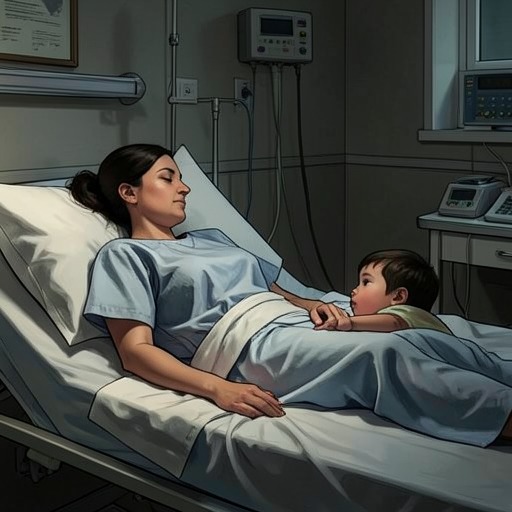
The vision then turns abruptly from the world Miraijin is trying to save to the danger in her grandfather’s body. A medical report identifies a pancreatic carcinoma that is already extensive and of imposing size, despite Marco’s regular six-month checkups and the absence of anything six months earlier. The imagined speed of the cancer recalls his sudden growth at fifteen: the body seems to repeat its earlier leap, now at seventy and at a terrible cost. The report makes the future crisis intimate. Just as Miraijin’s knees are imagined bending when he tells her, the world she is trying to save collapses around the news of his illness. The passage leaves both struggles suspended in that collision: a threatened public future and a private loss that Marco cannot hold still or ward off.